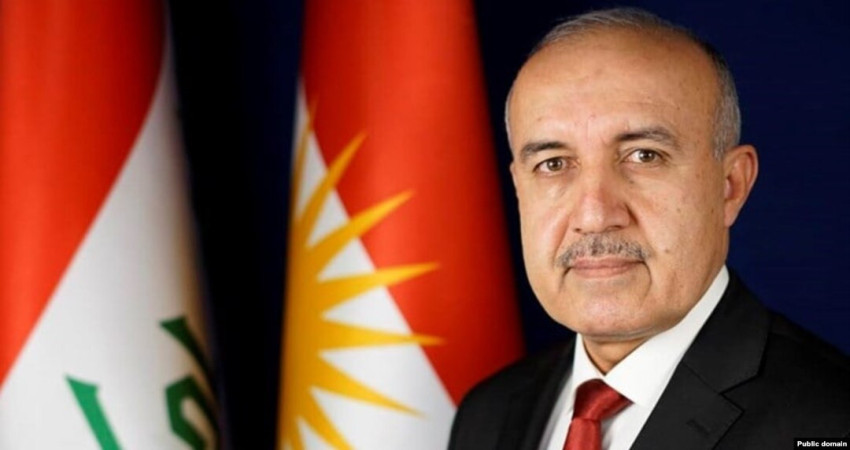
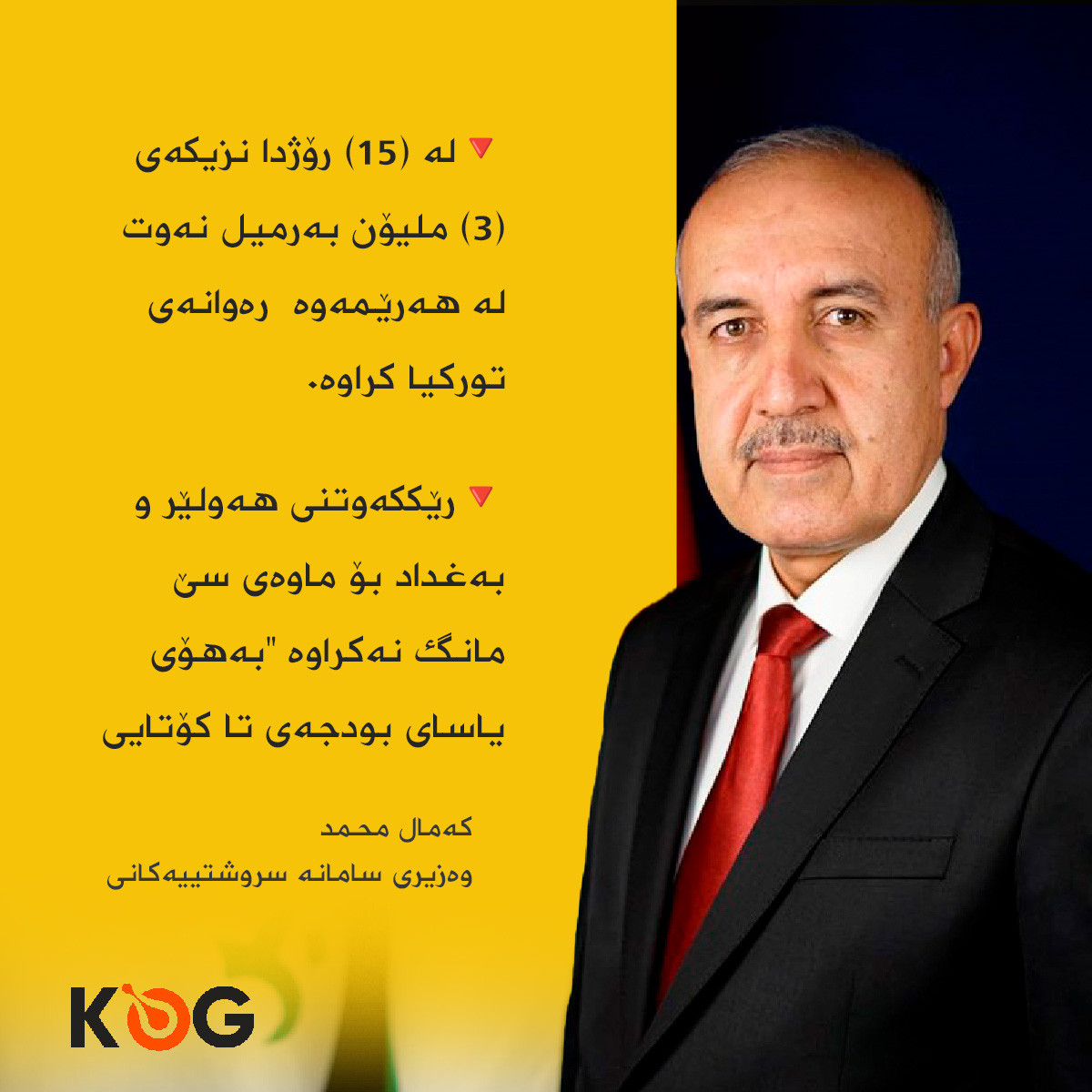
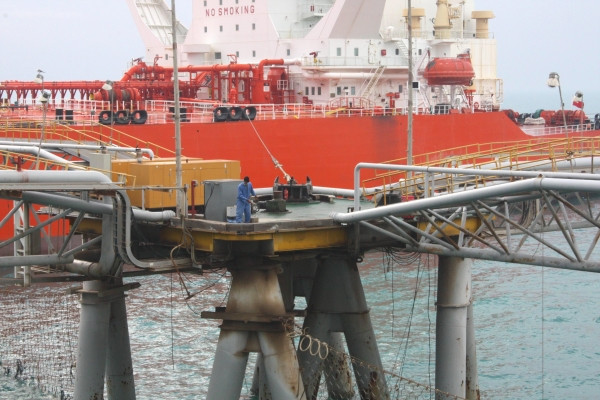
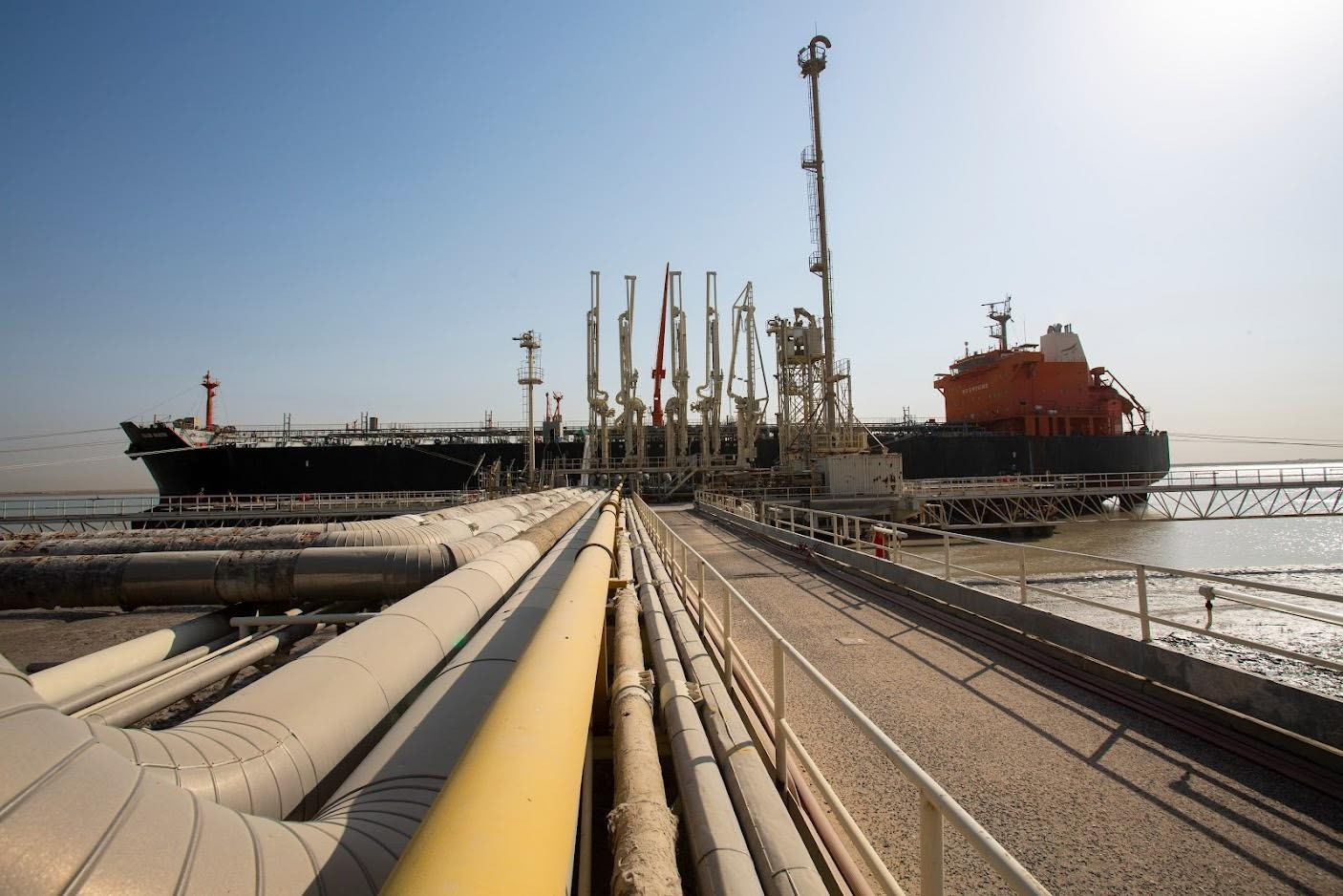
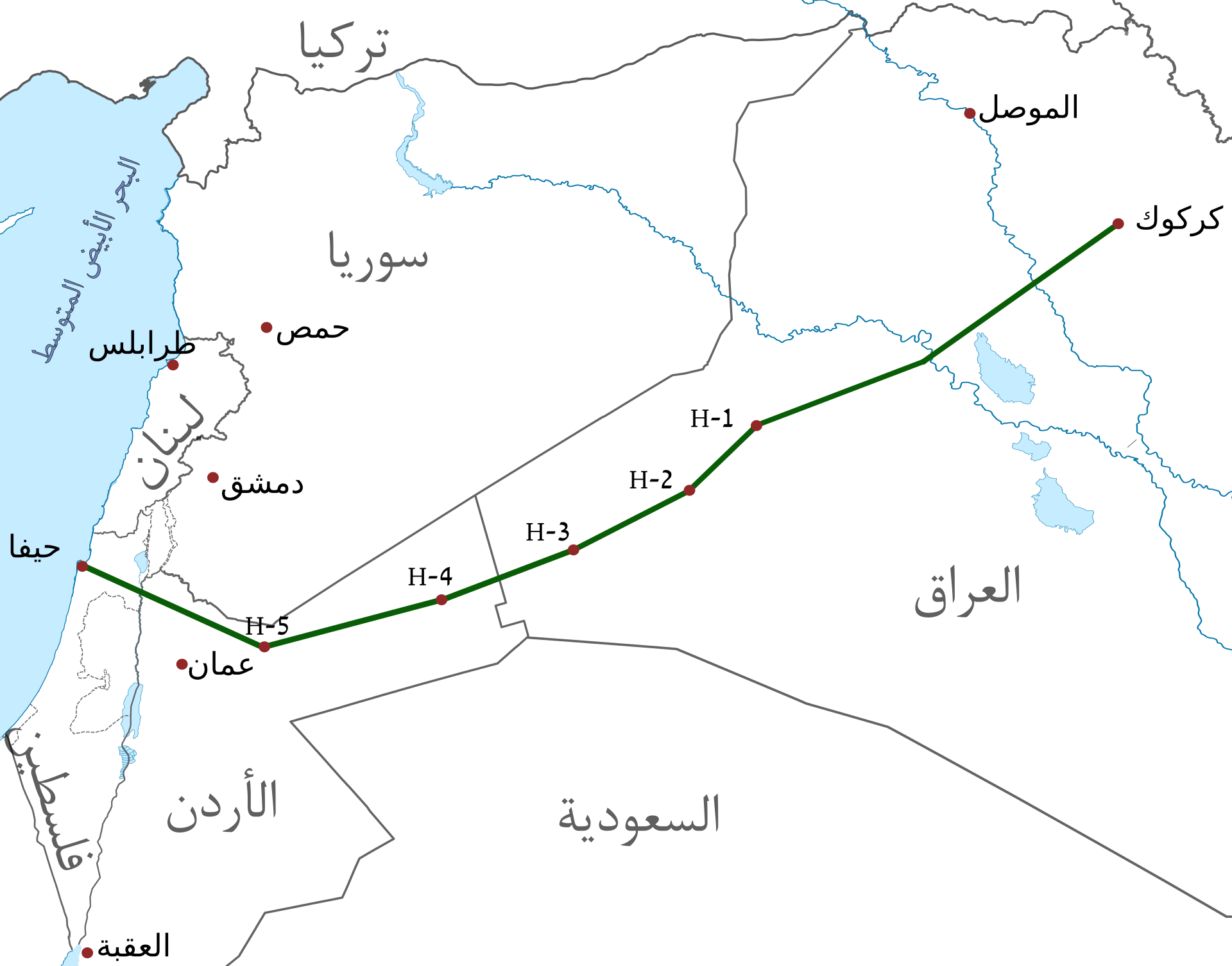
Mr. Kamal Mohammed, the Minister of Natural Resources of the Kurdistan Region, gave a detailed explanation regarding oil exports, production, domestic needs, and the oil and budget agreement in a statement to "Al-Jibal" platform. ♦️ Oil Export and Production: The Minister indicated that approximately three million barrels of oil have been transferred from the Kurdistan Region to Ceyhan port so far. Currently, the Region's daily production capacity has reached nearly 250,000 barrels. Over the past fifteen days, the export process has proceeded well, and the total exported oil has reached 2,945,000 barrels. During the same period, two main obstacles affected the export process: Overfilling of oil storage tanks in Ceyhan. Delays in the arrival of oil tankers. As a result of these obstacles, SOMO company requested the Ministry of Natural Resources on October 3rd to halt exports for ten hours. Despite these challenges, the average daily export during those fifteen days was 196,000 barrels, totaling 2,945,000 barrels. ♦️ Domestic Oil and Gasoline Needs: An agreement has been made to allocate 50,000 barrels of oil per day for domestic use in the Kurdistan Region. The Iraqi government has promised to provide more if this amount is insufficient to meet the needs. A comparison was also presented, stating that Iraq uses 800,000 barrels of oil daily for its domestic needs. The Minister emphasized that the 50,000 barrels of oil do not fully meet the Region's needs because this amount only produces approximately 1.5 million liters of gasoline, which is distributed among the cities of Erbil, Sulaymaniyah, and Duhok. This reduction in allocated oil has directly impacted gasoline prices and volume. Previously, the Region received 65,000 barrels of oil daily, and the price per liter of gasoline was 700 dinars, whereas now the amount has been reduced to 50,000 barrels, but the price of gasoline remains the same. He also mentioned that the current amount of gasoline does not meet the Region's actual demand, which is 3 million liters per day. Regarding producing companies, the Minister clarified that all their products are delivered to the Ministry of Oil and exported to Ceyhan port via the KPC pipeline. ♦️ Oil and Budget Agreement: Mr. Kamal Mohammed reiterated that the oil agreement between Erbil and Baghdad is not a three-month agreement; rather, it will continue until the end of 2025 according to Iraq's three-year budget law. The approval of the 2026 budget is expected to be delayed, and during that period, Law 1/12 will be used for expenditures. The oil agreement will continue as long as all three main parties (the Kurdistan Regional Government, the Central Government, and SOMO company) adhere to the provisions of the agreement.





If you need any old news please select this date then find.
If you need important news in your email please subscribe for newsletter.

this is discryption
© KOG. All Rights Reserved. Developed by Spy Sabbir